
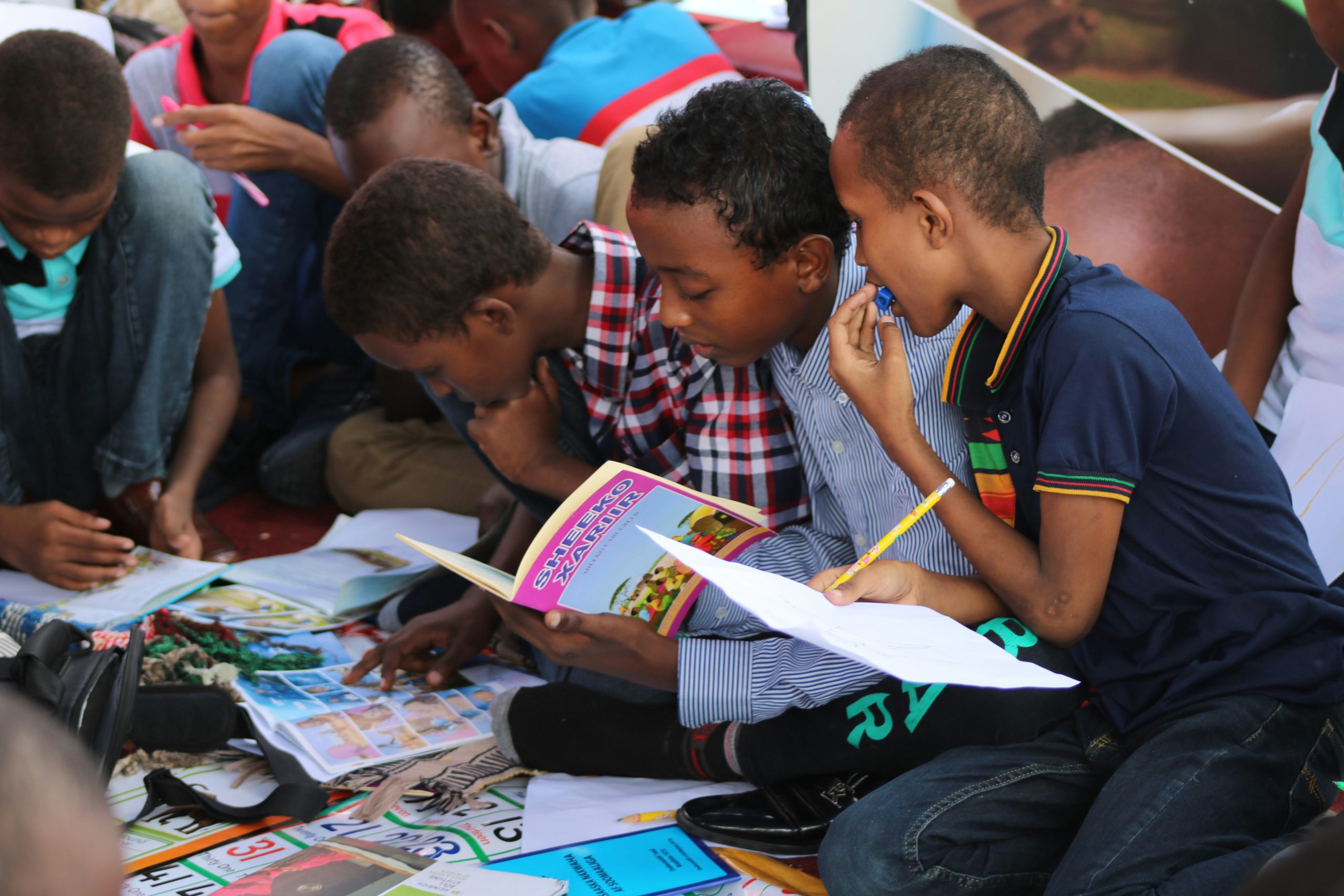
There is a version of learning that most of us remember from childhood, the kind that arrives on a Sunday evening, unwelcome and heavy, folded inside a school bag. Worksheets to complete. A chapter to read. Something to memorise before morning.
For many children today, that weight has not lifted. If anything, it has grown.
But then there is another kind of learning entirely. The kind that happens when a child takes apart a remote control just to see what is inside, or spends an entire afternoon figuring out the rules of a game they invented themselves, or asks a question so unexpectedly profound that you have to sit down before answering. This kind of learning does not feel like effort. It feels like living.
The difference between these two experiences is not a matter of intelligence. It is a matter of connection. And connection, fortunately, is something every parent can help build.
Why Children Lose Interest
Before we talk about solutions, it is worth pausing on the problem. When a child drags their feet over homework or glazes over during revision, the easiest explanation is that they are lazy or distracted. But that explanation is almost always wrong.
Most children who seem uninterested in learning are not rejecting knowledge itself; they are rejecting the particular form in which it is being delivered. They are bored because the content feels irrelevant to their lives.
They are overwhelmed because the pace does not match their readiness. Or they are disengaged because the approach clashes with how their brain actually processes information. A child who struggles to sit still and memorise from a textbook is not a poor learner; they may simply be a child who learns by doing, by moving, by experimenting.
Understanding this distinction changes everything about how we respond.
Start With What Already Fascinates Them
Every child arrives with a built-in curriculum of their own. One child is obsessed with dinosaurs. Another cannot stop asking questions about outer space, or football statistics, or why certain animals only come out at night. These obsessions are not distractions from education; they are the doorway into it.
When a child who loves dinosaurs discovers that palaeontologists use mathematics to estimate the age of fossils, mathematics suddenly has a reason to exist.
When a child passionate about football begins calculating shot percentages and possession statistics, they are practising real arithmetic without anyone asking them to. The subject matter has not changed. What has changed is the story surrounding it — and children, like all human beings, are moved by stories that feel relevant to them.
The art of nurturing curiosity lies in finding these bridges and building them deliberately.
Make the Abstract Concrete
One of the most common frustrations in children’s education is the gap between what is taught and what is lived. Fractions appear on a worksheet, disconnected from anything recognisable.
Grammar rules are memorised and promptly forgotten. History feels like a list of dates rather than a record of human experience.
The remedy is deceptively simple: bring learning into contact with real life as often as possible. Let a child measure ingredients in the kitchen, and fractions become intuitive. Walk them through calculating change at a market stall, and arithmetic becomes purposeful. Read those stories set in historical periods and dates transform into texture and atmosphere. When knowledge is anchored to experience, it sticks — not because children have been forced to remember it, but because it has become part of how they understand the world.
Honour the Way They Learn
One of the most liberating ideas in modern education is also one of the most practical: children do not all learn in the same way. Some children absorb information best through images and diagrams.
Others learn primarily through listening and discussion. Still others need to use their hands — to build, to move, to feel ideas as much as see them.
None of these styles is superior. They are simply different, and the fact that a classroom cannot always accommodate each one does not mean a home cannot try to.
A child who struggles to learn spelling through repetition might master it instantly through a game. A child who cannot concentrate through passive reading might retain the same information perfectly well if they hear it narrated, or act it out, or draw it. Paying attention to how your child naturally engages with the world is not indulgence — it is precision.
Protect Their Relationship With Failure
Perhaps the most important thing a parent can do for a child’s love of learning is to change their relationship with getting things wrong. In environments where performance is the only thing that matters, children begin to play it safe. They stop asking questions whose answers they do not already know. They avoid challenges that carry the risk of failure. They learn, in other words, to stop learning.
The antidote is to celebrate effort as loudly — and as sincerely — as results. Not with hollow praise, but with genuine recognition of what trying requires. When a child struggles through something difficult and keeps going, that persistence deserves to be named and honoured.
When they get something wrong, the question to ask is not why they failed, but what they now understand that they did not before. A child who grows up believing that confusion is a step on the road to understanding, rather than evidence of inadequacy, will not stop when learning gets hard. They will lean in.
Create Space for Questions
Curiosity dies quickly in an atmosphere where questions are unwelcome. Children are extraordinarily sensitive to the signals adults send — to the impatient sigh, the dismissive glance, the hurried answer designed to end the conversation rather than continue it.
When a child asks something unexpected, something that interrupts dinner or delays bedtime, the response in that moment carries enormous weight.
A culture of questioning is built one exchange at a time. It begins with treating every genuine question as worthy of genuine engagement — even when you do not know the answer, and especially then. Saying “I don’t know, let’s find out together” models something far more valuable than any specific piece of information: it shows a child that curiosity is not something to be embarrassed about, and that not knowing is simply the beginning of knowing.
Use Technology as a Tool, Not a Replacement
The children growing up today inhabit a world saturated with screens, and no amount of parental anxiety is going to change that fundamental reality. The more productive question is not whether children should engage with technology, but how that engagement can serve their development rather than shortchange it.
Used thoughtfully, digital tools can be remarkable learning companions. Interactive platforms can adapt to a child’s pace and level in ways that no single textbook can. Learning apps can turn repetitive practice into something genuinely enjoyable.
Educational content, when curated carefully, can expose children to ideas and perspectives far beyond what any single home or school could offer. The key is intentionality — not uncritical screen time, but structured, purposeful use of tools that genuinely serve the learning rather than simply filling the hours.
Build Routine Without Building Rigidity
Children thrive within structures that give the day predictability and purpose. A consistent time set aside for learning — not too long, not too pressured, but regular — communicates something important: that learning matters enough to make space for, and that space is protected.
Over time, this regularity builds a habit of mind as much as a habit of schedule. The child who sits down to read or work each afternoon is not simply completing a task; they are rehearsing the disposition of a learner.
At the same time, structure should never become rigid. A child who is genuinely absorbed in something should rarely be interrupted merely because the clock says it is time to stop.
Curiosity, when it appears, deserves to be allowed to run its course.
The Long Game
Raising a child who loves learning is not a project with a completion date. It is a long and sometimes nonlinear process — full of days when nothing seems to be working and months when progress feels invisible. There will be subjects that remain stubbornly uninteresting no matter what you try, and periods when external pressures make the whole endeavour feel thankless.
But there will also be the other moments. The afternoon a child comes home from school bursting to share something they discovered. The evening they read past their bedtime because they could not bear to put a book down. The quiet morning when you find them, unprompted, working something out on a piece of paper because they simply wanted to know.
Those moments are not accidents. They are the accumulated result of every time you answered a question with patience, every time you made learning feel like something worth doing, every time you showed a child — through your words, your actions, and your attention — that the world is extraordinary and endlessly worth understanding.
At Kidemia, we build learning experiences designed around the whole child — structured enough to build discipline, flexible enough to honour curiosity, and engaging enough to make every session something worth showing up for.