
What Should Independence Day Mean to Children?
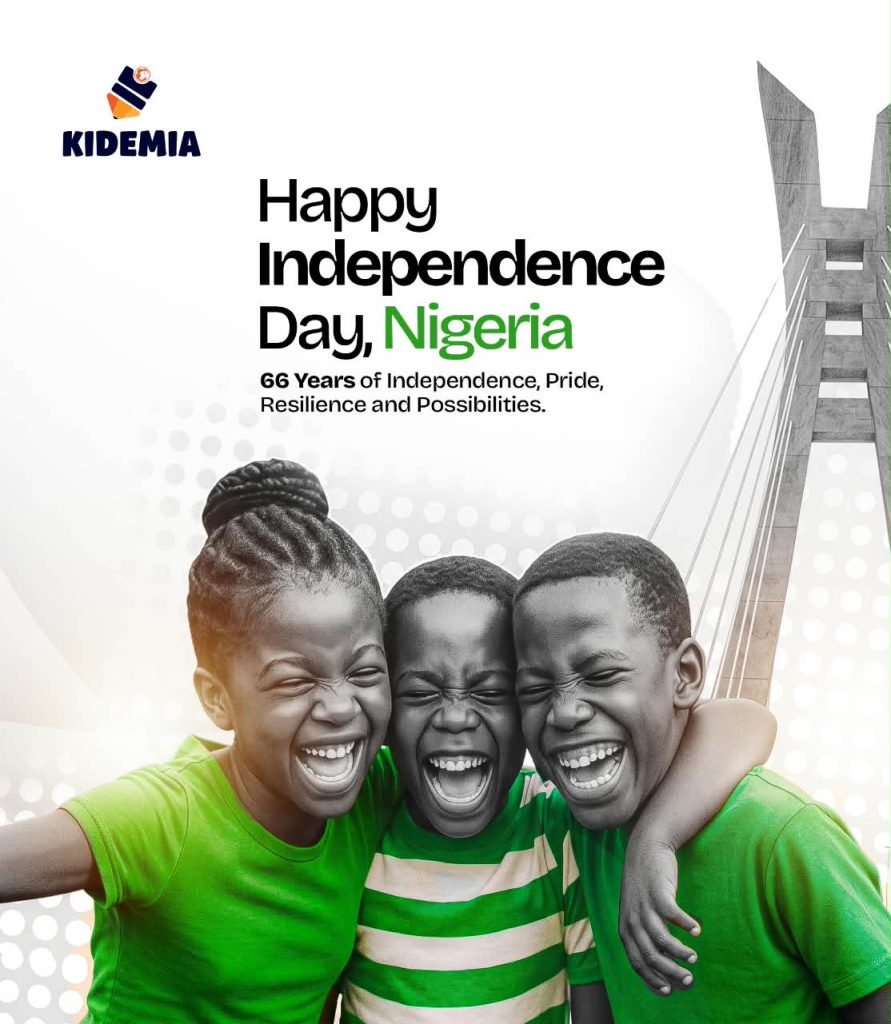
Happy 66th Independence Day!
Every year on October 1, Nigeria celebrates its Independence Day. It is a day of green and white, national anthems, flags, parades, celebrations and, of course, lessons about what happened in 1960.
Children learn that Nigeria gained independence from British colonial rule on October 1, 1960. They learn about the people who played important roles in the struggle for self-government, and they may even memorise the date for a history test.
But Independence Day can mean more to a child than remembering a date.
It can be an opportunity to help children understand where Nigeria came from, appreciate where it is today, and begin thinking about the country they will help shape tomorrow.
Understanding Where We Came From
Before children can understand what it means to build a country, they need to understand its history.
Nigeria’s independence was not simply the moment a flag changed or a new government took over. It was the result of years of political activity, advocacy and demands for self-government. On October 1, 1960, Nigeria became an independent nation after decades of British colonial rule.
Learning this history gives children context. It helps them understand why Nigeria has the institutions, cultures and political structures it has today and introduces them to the people and events that shaped the country.
But history should not stop at memorising names and dates.
Children should be encouraged to ask questions about the past. Why did people want independence? What did independence mean to Nigerians at the time? What challenges did the new nation face? And what can we learn from the successes and failures of those who came before us?
A child who understands history is better equipped to understand the present.
Independence Also Means Learning to Think for Yourself
There is another kind of independence that children can begin developing long before they become adults: intellectual independence.
Being independent does not mean refusing to listen to others. It means being able to listen, ask questions, examine information and eventually form your own informed conclusions.
This matters more than ever in a world where children have access to enormous amounts of information through phones, computers, television and social media.
Children will encounter opinions, videos, advertisements, news stories and information online every day. They need to learn not only how to access information, but how to think about it.
Why should I believe this?
Where did this information come from?
Could there be another explanation?
What evidence supports this claim?
These are small questions, but they help children develop the critical thinking skills they will need to become independent thinkers and responsible citizens.
Children Are Already Part of Nation-Building
Nation-building can sound like something reserved for politicians, scientists, entrepreneurs or other adults.
It isn’t.
Children are already members of their communities, and the habits they develop today can influence the kind of citizens they become tomorrow.
A child who learns to care for shared spaces is practising responsibility. A child who works respectfully with classmates is learning collaboration. A child who sees a problem and tries to find a solution is developing initiative.
A child who learns something new and shares it with someone else is contributing to their community in a small but meaningful way.
These actions may not look like nation-building when they happen in a classroom or on a playground. But countries are built by people, and people develop their values and habits long before they become adults.
This is why education is such an important part of building a nation.
Patriotism Should Come With Curiosity
Independence Day is also an opportunity to talk about patriotism.
Children should be encouraged to appreciate Nigeria: its many cultures and languages, its music and literature, its history, its creativity, its food, its natural resources and the achievements of Nigerians at home and around the world.
But loving your country should not mean believing that everything about it is perfect.
A child can be proud to be Nigerian and still ask why some communities lack adequate infrastructure. They can celebrate Nigerian achievements while wondering how education can be improved. They can appreciate their country’s culture while thinking about how technology and innovation could help solve everyday problems.
In fact, caring about a country means being interested in making it better.
Patriotism can therefore be more than waving a flag once a year. It can mean taking an interest in your community, understanding your country’s challenges and believing that you have a role to play in solving them.
Preparing Children for the Nigeria Ahead
The Nigeria today’s children will grow up in will not be exactly the Nigeria their parents know.
Technology is changing how people learn, work and communicate. Artificial intelligence is transforming industries. New businesses and ideas are emerging, while problems such as access to quality education, infrastructure and economic opportunity continue to require creative solutions.
This means children need more than knowledge they can memorise for an examination.
They need to be curious.
They need to be able to think critically, communicate, collaborate and solve problems. They need digital literacy, financial awareness and the confidence to create as well as consume. They need opportunities to experiment, make mistakes, ask questions and turn ideas into solutions.
These skills do not simply prepare children for future careers. They prepare them to participate meaningfully in the society around them.
So What Should Independence Day Mean to a Child?
It can mean knowing the history of the country they call home.
It can mean understanding that the freedoms and institutions they inherit have a history.
It can mean learning to ask questions rather than accepting every answer.
It can mean taking responsibility for their communities.
It can mean appreciating Nigeria while recognising that there is still work to be done.
And perhaps most importantly, it can mean understanding that the future of the country is not something that simply happens to them.
One day, today’s children will become the teachers, engineers, writers, doctors, entrepreneurs, scientists, artists, policymakers and community leaders shaping Nigeria.
The question is not only what Nigeria will give them.
It is also what they will bring to Nigeria.
This Independence Day, as we remember October 1, 1960, let us give children more than a history lesson. Let us help them understand that independence comes with responsibility, citizenship comes with participation, and building a better country begins with people who believe they can contribute to it.
Happy Independence Day!